

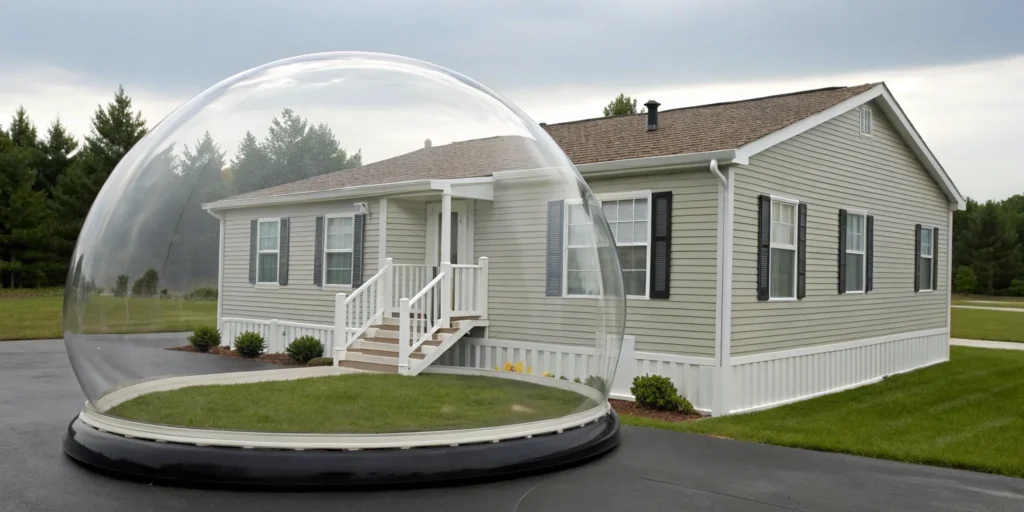
Got a mortgage? Then your lender has strict insurance rules you need to follow. They have a big stake in your home, after all. They need to know your policy has enough coverage to completely rebuild if something goes wrong. The number they care about most is your manufactured home replacement cost. This isn’t your home’s market value—it’s the full amount needed to build a new, similar home from scratch. Getting this right is key for your lender, but it’s even more important for protecting your own financial future.
Key Takeaways
- Choose the right valuation to protect your finances: Replacement Cost (RC) coverage pays to build a new home at today’s prices, while Actual Cash Value (ACV) only covers its depreciated worth. Opting for RC is the best way to ensure you can fully rebuild without draining your savings.
- Keep your coverage limit accurate by tracking changes: Your home’s replacement cost is based on construction factors like materials and local labor, not its market value. Be sure to tell your agent about any upgrades or renovations to ensure your policy can cover the home you actually have.
- Partner with an expert for an annual policy checkup: Insurance needs change over time due to rising construction costs and home improvements. A yearly review with your agent confirms your coverage is sufficient, meets lender rules, and is tailored to your specific situation.
What Is Manufactured Home Replacement Cost?
When you’re insuring your manufactured home, one of the most important terms you’ll see is “replacement cost.” It sounds simple, but it’s often confused with other valuations like “actual cash value” or “market value.” Getting this right is crucial for making sure you have the proper protection and won’t face a huge financial shortfall if you ever need to rebuild. Let’s break down exactly what these terms mean for you and your home insurance policy.
Replacement Cost vs. ACV: What’s the Difference?
Think of Replacement Cost (RC) as “new for old” coverage. If your home is destroyed, this policy pays to rebuild or replace it with a brand new one of similar quality at current prices, without deducting for age or wear (depreciation). It’s designed to make you whole again. On the other hand, Actual Cash Value (ACV) pays you what your home was worth right before the loss. It takes the cost of a new replacement and then subtracts for depreciation. While an ACV policy usually has a lower premium, it can leave you with a significant financial gap to cover on your own if you need to completely rebuild.
Why Your Home’s Market Value Isn’t Its Replacement Cost
It’s a common mistake to think your home’s market value is the same as its replacement cost, but they are two very different numbers. Market value is what you could sell your home for, a figure that includes the value of the land it sits on. Replacement cost, however, is strictly the price to rebuild the structure itself with similar materials at today’s labor and construction costs. Insurers determine this by looking at your home’s size, age, and the quality of its materials. This distinction is why lenders often require full replacement cost coverage, ensuring the loan can be paid off even if the home’s market value is lower. Getting expert guidance on your policy can help you secure the right amount of coverage.
Why You Need Replacement Cost Coverage
Choosing the right insurance for your manufactured home is one of the most important financial decisions you’ll make. It’s about protecting your home and your future. Replacement cost coverage is a key part of that protection, offering peace of mind that goes far beyond just ticking a box. This type of policy ensures you can truly rebuild your life after a disaster without facing a massive, unexpected financial burden. It addresses two critical needs: it protects you from devastating out-of-pocket expenses and helps you meet the strict requirements set by mortgage lenders. Let’s look at why this coverage is so essential for manufactured homeowners.
Avoid a Major Financial Hit After a Total Loss
Imagine losing your home in a fire or a severe storm. Replacement cost coverage is designed to pay for a brand new manufactured home of similar quality at today’s prices. Think of it as a “new for old” promise. It doesn’t subtract money for age or wear and tear (depreciation). This is the opposite of an Actual Cash Value (ACV) policy, which only pays what your home was worth the moment before it was destroyed. An ACV policy can leave you with a huge financial gap between the insurance payout and the actual cost of a new home. While replacement cost policies may have a higher premium, they provide the funds you need to fully recover without draining your savings.
Satisfy Your Lender’s Insurance Requirements
If you have a mortgage on your manufactured home, your lender has a major financial stake in the property. To protect their investment, most lenders will require you to carry full replacement cost coverage. This is true even if your home is older and its market value has decreased over time. The lender wants to ensure that if the home is destroyed, there will be enough money to replace it and pay off the loan. Finding an insurer willing to provide this level of coverage for an older home can sometimes be a challenge. This is where working with an experienced agent makes all the difference. We can help you find the right insurance solutions that protect your home and satisfy your lender’s rules.
How Is Manufactured Home Replacement Cost Calculated?
Figuring out your home’s replacement cost isn’t a guess. It’s not based on your property’s market value or what you paid for it. Instead, insurers use a detailed calculation to determine exactly how much it would cost to rebuild your home from the ground up, using similar materials. This process looks at several key factors, from the size of your home to the specific costs of labor and materials right here in our local area.
The Role of Your Home’s Size, Age, and Materials
Insurers start with the fundamentals. They look at your home’s total square footage, its age, and the quality of the materials used, from the flooring and cabinets to the condition of your roof. They use specialized software to estimate the cost to rebuild with materials of a similar kind and quality. This calculation is based on construction costs, not the real estate market. That’s why the replacement cost can be very different from the price your home might sell for, which includes the value of the land itself.
Getting Credit for Custom Features and Upgrades
Did you recently remodel your kitchen or add a new deck? These upgrades increase your home’s replacement cost. It’s essential to let your insurance agent know whenever you make significant improvements. If you don’t, your coverage limit might not be high enough to rebuild your home to its improved state after a loss. Keeping your agent in the loop ensures your insurance services accurately protect the home you’ve worked so hard to create.
How Local Labor and Construction Costs Factor In
Where you live plays a huge role in rebuilding costs. The price of lumber, drywall, and skilled labor varies from one place to another. An insurer will use cost data specific to your location, like Springfield or East Peoria, to create an accurate estimate. While a general rule of thumb for manufactured homes might be $50 to $125 per square foot to rebuild, this is just a starting point. A local expert can help you get a much more precise figure. You can always contact us to review your home’s specific details.
Common Replacement Cost Myths, Debunked
When it comes to insuring your manufactured home, a few common misunderstandings can lead to major coverage gaps. Believing these myths can leave you underinsured and facing unexpected costs after a disaster. Let’s clear up the confusion around replacement cost so you can feel confident that your policy truly protects your home and your finances.
Myth #1: “My Home’s Market Value Is Enough Coverage”
It’s easy to assume that if you know what your home would sell for, you know how much insurance you need. But market value and replacement cost are two very different numbers. Market value, or Actual Cash Value (ACV), is what your home is worth today, including depreciation for age and wear. It’s the price a buyer would pay for it in its current condition.
Replacement cost, on the other hand, is the price to rebuild your home from the ground up with brand-new materials at today’s prices. It doesn’t factor in depreciation. Relying on market value for your coverage limit could leave you thousands of dollars short of what you actually need to rebuild.
Myth #2: “Any Home Can Get Replacement Cost Coverage”
While replacement cost coverage offers the best protection, it isn’t available for every manufactured home. Insurance carriers often have specific eligibility requirements. Generally, newer homes, typically those less than 10 years old, are more likely to qualify. Insurers also consider whether the home is your primary residence and if it meets certain size requirements.
These guidelines exist because it becomes more difficult to find modern, comparable materials and accurately estimate rebuilding costs for older homes. If your home is older, don’t worry, you still have great options. It just means we’ll need to find a different type of policy, like one based on Actual Cash Value, to make sure you have the right home insurance coverage for your situation.
Myth #3: “Replacement Cost Is the Same as Actual Cash Value”
This is one of the most critical distinctions in insurance. Replacement Cost (RC) and Actual Cash Value (ACV) policies pay out very differently. An RC policy pays to replace your damaged property with a new, similar item without deducting for depreciation. If your 10-year-old roof is destroyed, an RC policy gives you the money for a brand-new roof at current prices.
An ACV policy, however, pays you for the depreciated value of that same roof. It would calculate the roof’s value right before it was damaged, meaning you’d get a payout for a 10-year-old roof, not a new one. That difference is money that comes directly out of your pocket to complete the repairs.
Financing Your Replacement Beyond Insurance
Sometimes, even with a good insurance policy, there’s a gap between your payout and the total cost of a new home, especially if you decide to upgrade. Or, you might be looking to replace an older home that isn’t covered by insurance. The good news is that there are other financial resources available to help you make it happen. From government programs to special grants, let’s look at some options that can help you finance your new home beyond your insurance settlement.
Government and Utility Assistance Programs
Many states and even local utility companies offer programs to help homeowners replace older, less efficient manufactured homes. While programs vary by location, they often target low-to-middle-income families and can provide significant financial aid. For example, some states have Mobile and Manufactured Home Replacement (MMHR) programs that offer funds to bridge the gap. It’s always worth checking with your state’s housing authority, like the Illinois Housing Development Authority (IHDA), to see what assistance might be available to you. These programs are designed to help residents secure safer, more modern, and energy-efficient housing, making them a fantastic resource if you qualify.
Exploring Grants, Special Loans, and Trade-In Options
Beyond broad government programs, you can find more specific financial tools to help with your replacement. Look for grants focused on energy efficiency, which can provide thousands of dollars toward a new, energy-saving home. Some lenders also offer special loans tailored for manufactured home replacements, which may have different terms than a traditional mortgage. Another option to explore is a trade-in. Some retailers will apply the value of your old home toward the purchase of a new one, which can reduce your overall cost. It’s a good idea to research all of these avenues to piece together a financing plan that works for your budget and your project.
The Replacement Process: From Old to New
Once you have the financing sorted out, the next step is the replacement itself. This process is a bit like a major renovation and a construction project rolled into one. It involves choosing the right type of new home for your needs and your property, and then managing the logistics of removing the old structure and preparing the site for the new one. Breaking it down into manageable steps can make the entire project feel much less overwhelming. Let’s walk through what you can expect.
Choosing Your New Home: Types and Construction Options
Replacing your home is a unique opportunity to get exactly what you want. You aren’t limited to a carbon copy of your old home. You can choose a different layout, better features, and even a different type of construction altogether. Understanding your options is the first step toward building a home that truly fits your lifestyle for years to come.
Manufactured, Modular, and Site-Built Homes
You have several choices when it comes to your new home’s construction. A new manufactured home is built entirely in a factory to federal HUD code and is a popular, cost-effective option. A modular home is also factory-built but in sections, which are then assembled on your property. These are built to state and local building codes, just like a traditional home. Finally, you could opt for a site-built home, which is constructed from the ground up on your land. This offers the most customization but is often the most expensive. Some builders even specialize in helping homeowners replace their old manufactured home with a new custom-built one, giving you a wide range of possibilities.
Energy-Efficient and DIY Options
No matter which construction type you choose, consider prioritizing energy efficiency. A modern, energy-efficient home isn’t just good for the environment; it’s great for your wallet and your well-being. These homes are built with better insulation, high-performance windows, and efficient heating and cooling systems. This means you’ll be more comfortable year-round, enjoy lower monthly utility bills, and breathe healthier indoor air. For those who are handy, taking on some of the finishing work yourself—like painting or landscaping—can be a way to save money, but be sure you have the skills and time before committing to a DIY approach on major construction elements.
Managing the Physical Removal and Site Preparation
Before your new home can be delivered, the old one has to go. This process involves more than just hauling it away. It includes safely disconnecting all utilities, demolishing or deconstructing the old home, and disposing of the materials. Afterward, the site must be prepared for the new structure. This can involve grading the land, pouring a new foundation or slab, and ensuring all utility hookups are ready. Some replacement assistance programs even include funds to help with these costs. Because this work is so critical to the safety and stability of your new home, it’s essential to hire experienced contractors who specialize in manufactured home site preparation.
Getting Insurance for an Older Manufactured Home
If you own an older manufactured home, you know it has character. But when it comes to insurance, its age can create some unique challenges. The biggest one is depreciation, which directly affects how much you’d receive from a claim after a loss. Understanding your options is the key to making sure you can rebuild without facing a huge financial gap. It’s not always straightforward, but with the right information, you can find a policy that truly protects your home and your finances.
How Depreciation Affects Your Insurance Policy
The main thing to understand is the difference between two policy types: Actual Cash Value (ACV) and Replacement Cost (RC). An Actual Cash Value policy pays you what your home is worth today, factoring in wear and tear. Think of it as the market value. While this keeps your premiums lower, the payout might not be enough to buy a brand-new home. On the other hand, a Replacement Cost policy covers the full price of replacing your home with a new, similar one, ignoring depreciation. It costs a bit more, but it gives you the peace of mind that you can fully rebuild.
How to Find the Right Coverage for an Older Home
Here’s where it gets tricky. Your lender might require you to have full replacement cost coverage, but many insurance carriers are hesitant to offer it for older homes. Why? Because the risk is higher, and the difference between the home’s cash value and what it costs to replace is significant. Generally, only homes under 10 years old easily qualify. This can leave you feeling stuck between your lender’s rules and your available options. The best step you can take is to partner with an agent who knows the ins and outs of these policies. We can help you explore all the available insurance solutions to find one that protects your home and satisfies your lender.
How to Get an Accurate Replacement Cost Estimate
Figuring out your home’s replacement cost can feel like a guessing game, but it doesn’t have to be. An accurate estimate is the key to making sure you have enough coverage to rebuild if something unexpected happens. If your policy limit is too low, you could be left paying a significant amount out of pocket to get back on your feet. On the other hand, if it’s too high, you might be paying for more insurance than you actually need.
Taking a few proactive steps can give you a clear and realistic picture of what it would cost to replace your home. By getting a professional opinion, checking local construction costs, and keeping detailed records, you can feel confident that your insurance policy truly has you covered. Let’s walk through how you can get an accurate estimate.
Get a Professional Home Appraisal
One of the most reliable ways to determine your home’s replacement cost is to get a professional appraisal. This isn’t the same as a real estate appraisal, which determines market value. Instead, an insurance appraiser focuses specifically on the cost to rebuild. They will look at details like your home’s square footage, age, and the quality of construction materials, from the flooring and cabinets to the type of roof you have. Insurers use specialized tools to calculate this figure, giving you a solid number to work with. An experienced agent can help you find a qualified appraiser and ensure you have comprehensive coverage based on the results.
Consult with Local Home Builders
Local builders are an excellent resource for understanding current construction costs in your area. They have firsthand knowledge of material prices and labor rates right here in Central Illinois, which can change over time. You can ask a few reputable builders for a rough estimate to rebuild a home like yours. For manufactured homes, the cost per square foot is often different from that of traditional site-built homes, so be sure to specify this. This step gives you a real-world benchmark to compare against your insurance policy’s estimate, helping you confirm your coverage limit is on the right track.
Keep a Record of All Your Upgrades
Did you recently remodel your kitchen, add a deck, or install a new roof? Every improvement you make can increase your home’s replacement cost. It’s so important to keep your insurance provider in the loop about these upgrades. A simple way to do this is to keep a dedicated folder with receipts, contracts, and photos of all the work you’ve done. When you make a significant change, get in touch with us to review your policy. Updating your coverage ensures that your hard work and investment are protected, so you can rebuild your home exactly as you’ve improved it.
A Financial Perspective on Manufactured Home Ownership
Manufactured homes offer an affordable path to homeownership, which is a huge draw for many people. However, it’s important to look at them from a long-term financial angle, which can be quite different from owning a traditional, site-built house. The financial journey involves more than just the initial purchase price; it includes understanding how the home’s value changes over time and what that means for your insurance and overall financial security. While you gain a place to call your own, you also take on a set of financial risks that are unique to this type of property. Being aware of these factors from the start helps you make informed decisions and protect your investment properly.
Why Some Experts Advise Caution
Financial experts often point to one major issue: depreciation. Unlike a traditional home that typically gains value, a manufactured home often loses value over time, much like a car. As financial personality Dave Ramsey notes, investing in something that consistently loses value can be a risky financial move. This depreciation has a direct impact on your insurance. For older homes, many carriers will only offer an Actual Cash Value (ACV) policy, which pays you what the home is worth today—not what it costs to replace it. This can leave you with a massive gap between your insurance payout and the cost of a new home after a total loss. Navigating these challenges is why having the right insurance solutions is so critical for protecting your finances.
Does Your Insurance Policy Fully Protect You?
Having an insurance policy is one thing; having the right insurance policy is another. The last thing you want after a disaster is to discover your coverage falls short of what you need to rebuild your life. Taking a proactive approach to your policy ensures you have the financial protection you expect when you need it most. It’s about more than just ticking a box; it’s about securing your peace of mind.
A little bit of attention now can save you from major financial headaches later. You can feel confident in your coverage by regularly reviewing your limits, understanding exactly how your policy pays out, and working with a professional who can guide you through the details. These simple steps will help you confirm that your manufactured home is properly protected, no matter what comes your way.
Why You Should Review Your Policy Annually
Your life and your home aren’t static, and your insurance policy shouldn’t be either. It’s a good habit to review your coverage limits at least once a year with your agent. Construction costs can rise, you might make improvements to your home, or you may acquire new valuables. An annual check-in ensures your policy limits keep pace with these changes. It’s essential to understand how your insurance company determines the payout if your home is damaged. A quick review can confirm you have enough coverage to fully recover from a loss.
How Your Policy Pays Out After a Claim
Knowing the difference between Replacement Cost (RC) and Actual Cash Value (ACV) is key to having the right protection. Think of it this way: Replacement Cost coverage pays to rebuild or replace your home with a new one of similar quality at today’s prices, without deducting for age or wear. On the other hand, Actual Cash Value pays you what your home was worth right before the damage occurred, which includes depreciation. For most homeowners, Replacement Cost coverage is the better choice because it provides the funds to actually rebuild without a significant financial gap.
Find the Right Insurance Partner
Let’s be honest, insurance policies can be full of complex terms and conditions. You don’t have to figure it all out on your own. Partnering with an independent insurance agent gives you a guide who can translate the jargon and help you find the best coverage for your specific home and situation. An expert can explain the rules, compare options from different carriers, and ensure your policy is tailored to your needs. If you have questions about your current coverage or want to explore your options, our team at Feld Insurance is here to provide clear, trusted guidance.
Related Articles
- Your Guide to Manufactured Home Insurance Quotes
- Home Insurance on Mobile Homes: A Complete Guide
- Is a Mobile Home Policy the Same as Homeowners?
Frequently Asked Questions
Why would I choose an Actual Cash Value (ACV) policy if replacement cost is better? That’s a great question. While replacement cost coverage offers the most complete financial protection, an Actual Cash Value (ACV) policy typically comes with a lower premium. For some homeowners, especially those with older manufactured homes that may not qualify for replacement cost, an ACV policy is a practical and affordable way to get solid protection. The key is understanding the trade-off: you pay less for the policy, but you would also receive less in a claim because of depreciation, meaning you’d have to cover more of the rebuilding costs yourself.
My lender requires insurance equal to my loan amount. Is that the same as replacement cost? Not necessarily, and it’s an important distinction to make. Your loan amount is what you owe the bank, while your home’s replacement cost is the actual price to rebuild it from scratch at today’s labor and material prices. Lenders require insurance to protect their investment, and they often insist on full replacement cost coverage to ensure the loan can be paid off even if the home is a total loss. In many cases, the cost to rebuild is actually higher than the loan balance, especially after a few years of rising construction costs.
What happens if I remodel my kitchen or add a deck? Do I need to update my policy? Yes, you absolutely should. Any significant improvement increases what it would cost to rebuild your home, which is its replacement cost value. If you invest in a major upgrade but don’t tell your insurance agent, your coverage limit won’t reflect the home’s new, higher value. This could leave you underinsured. It’s always a good idea to call your agent after completing a project to make sure your policy is updated to protect your investment.
What are my options if my older manufactured home doesn’t qualify for replacement cost coverage? If your home’s age makes it ineligible for a replacement cost policy, you still have great options for coverage. The most common solution is an Actual Cash Value (ACV) policy. This type of policy covers your home for its value at the time of the loss, which accounts for depreciation. While the payout would be less than a replacement cost policy, it provides essential financial protection that aligns with the property’s current worth and helps satisfy lender requirements.
How often should I review my home’s replacement cost value? It’s smart to review your policy and your home’s replacement cost value with your agent at least once a year. Construction and material costs are always changing, so a coverage limit that was accurate two years ago might be too low today. An annual check-in ensures your policy keeps up with local economic shifts and any improvements you’ve made, so you can feel confident you have the right amount of protection.